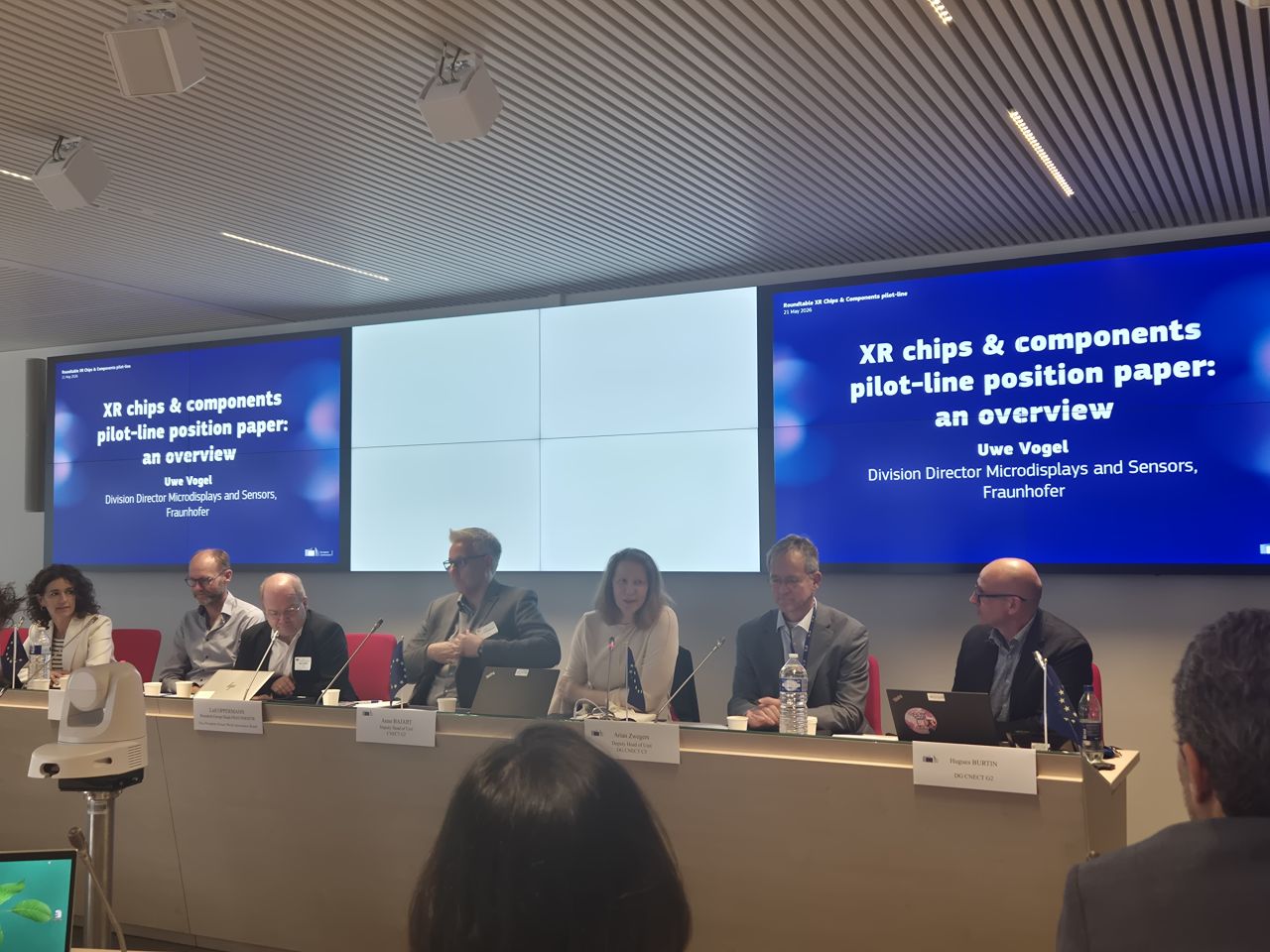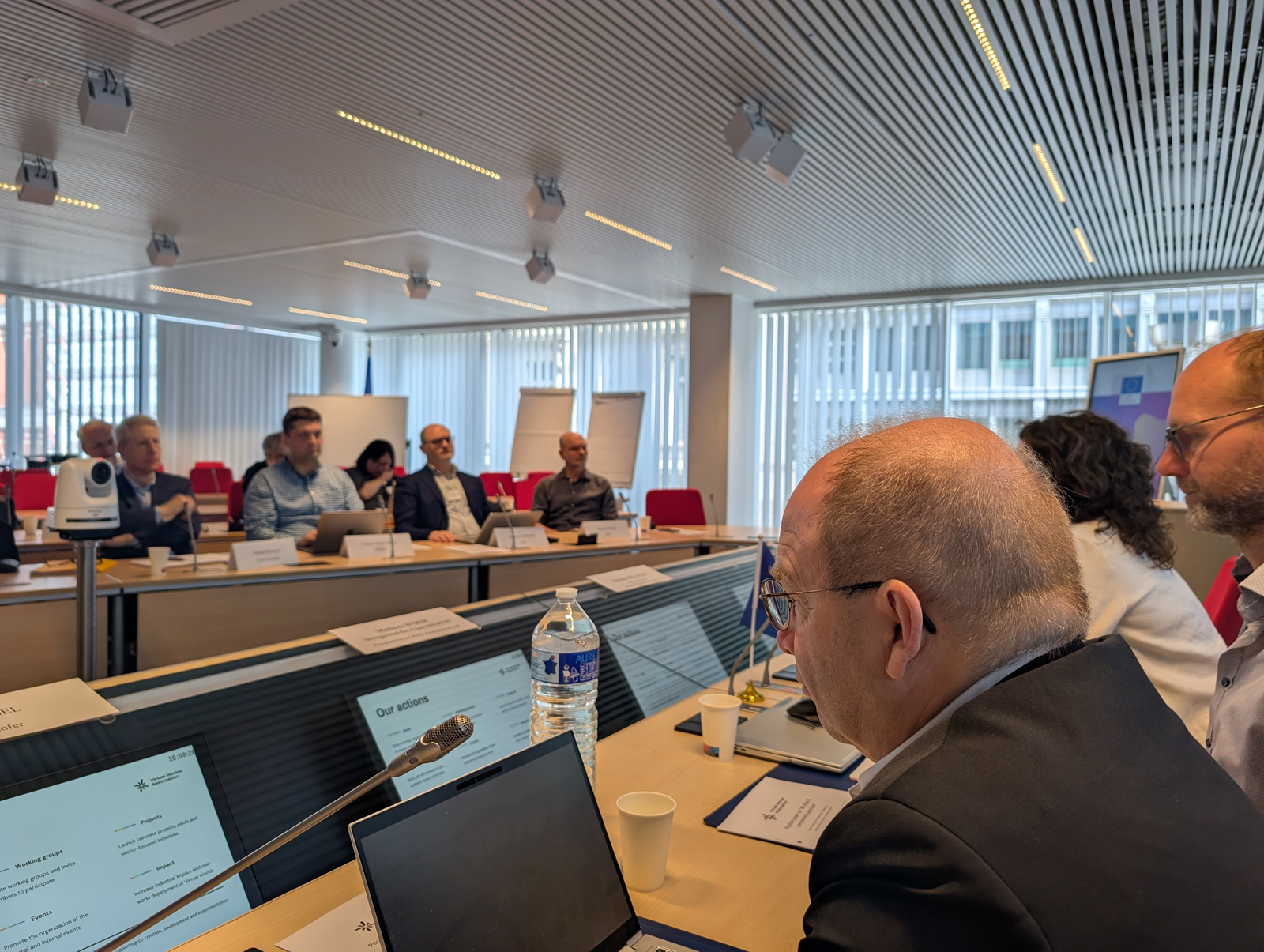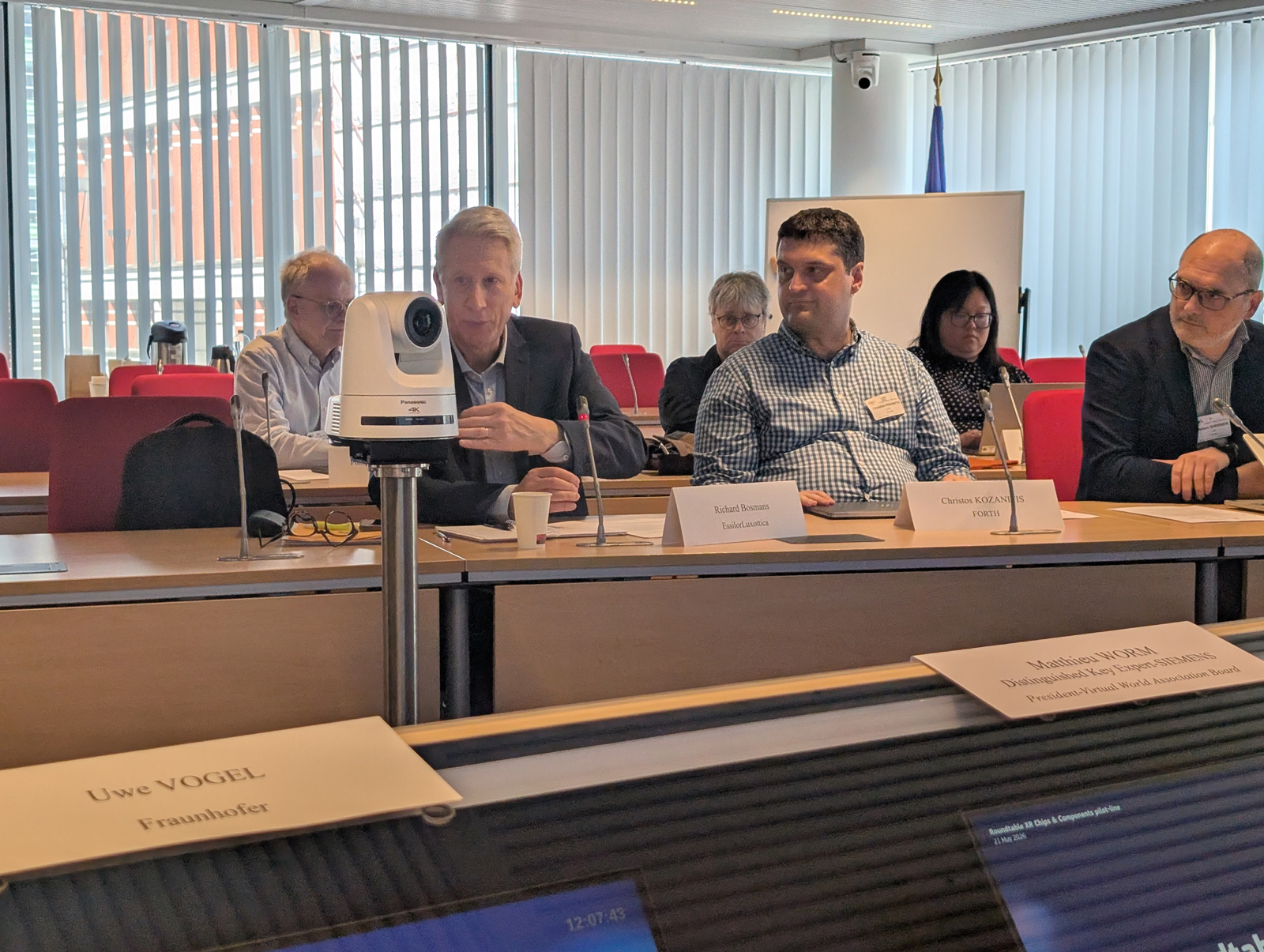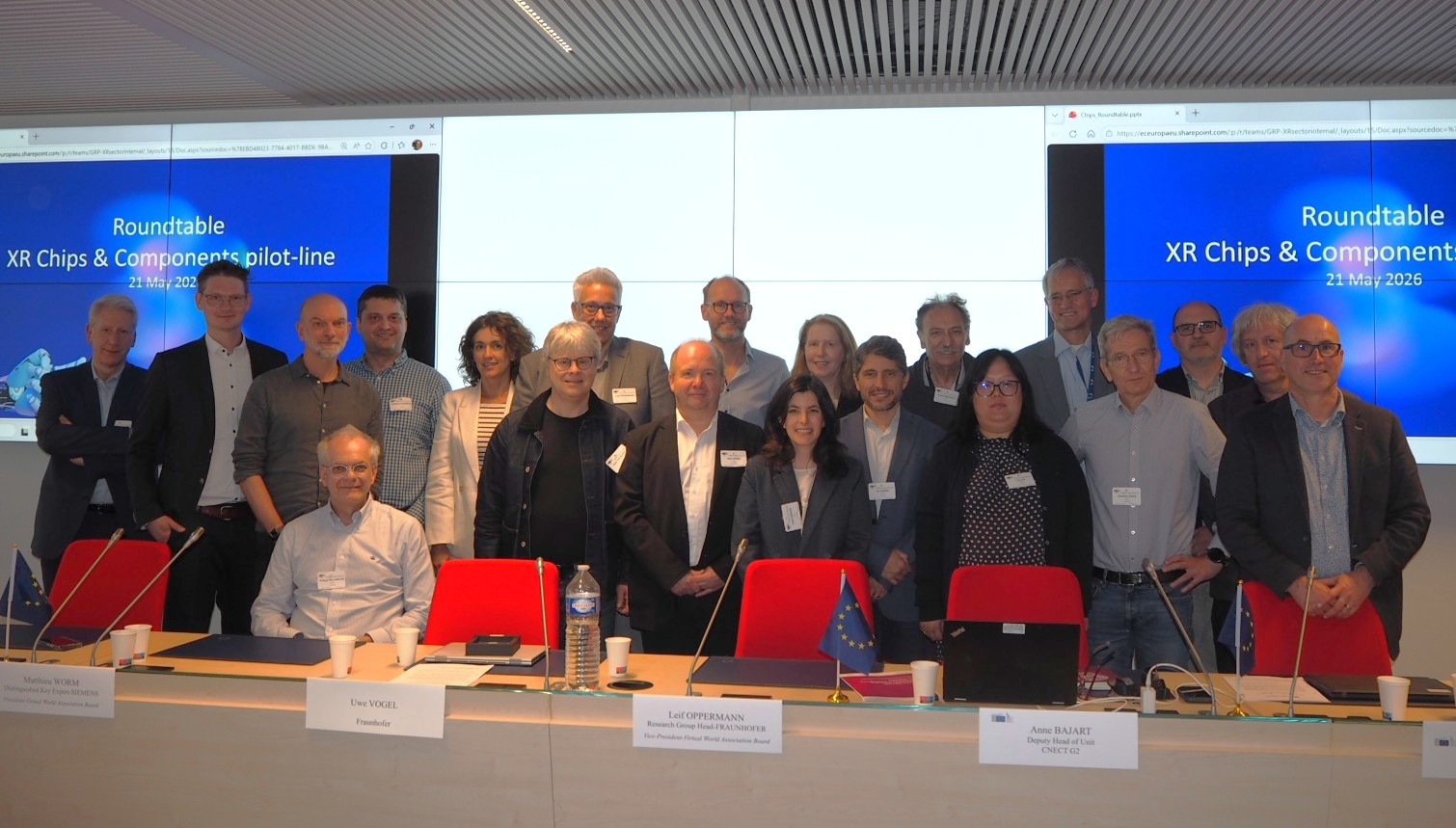
The discussion brought together representatives from industry, research organisations, academia, and public institutions to examine how Europe can strengthen its position in the XR hardware value chain and reduce strategic dependencies in technologies that underpin immersive experiences, digital twins, and future Virtual Worlds.
The roundtable took place in Brussels in the context of the European Commission's efforts to advance Virtual Worlds and Web 4.0 technologies and contributes to the broader objective of reinforcing Europe's technological sovereignty. The event was opened by Anne Bajart (DG CONNECT Unit G.2), who presented the European Commission’s strategy on Virtual Worlds and Web 4.0 and outlined the role of these technologies in strengthening Europe’s digital competitiveness, innovation capacity, and technological sovereignty.
Alejandra del Valle, Secretary General of the Virtual Worlds Association (VWA), introduced the Association and its role in bringing together industry, research organisations, academia, and public stakeholders to shape a common European agenda for Virtual Worlds.
Arian Zwegers (DG CONNECT Unit C.3) then presented the European Chips Act and the existing Chips Pilot Lines, highlighting their importance for strengthening European semiconductor capabilities and accelerating the transition from research and development to industrial deployment.
This introductory session was followed by an overview of the XR Chips & Components Pilot-Line position paper, presented by Uwe Vogel (Fraunhofer). The presentation outlined the motivation, scope, and structure of the initiative and provided a basis for the subsequent stakeholder discussion on the technological, industrial, and ecosystem requirements for a future European XR Chips & Components Pilot Line.
Why XR Chips & Components Matter
Virtual Worlds are often discussed in terms of software platforms, AI systems, or immersive applications. Yet their success ultimately depends on the availability of advanced hardware capable of delivering high-performance/low-latency or energy-efficient, and user-friendly experiences, also in non-immersive settings.
From displays, sensors, optics, and processors to dedicated XR system-on-chip architectures, these technologies form the foundation upon which future Augmented Reality, Virtual Reality, or ubiquitous computing systems will be built.
Europe possesses world-class expertise across many parts of this ecosystem. However, capabilities remain fragmented and face strong global competition. Participants therefore explored how Europe can better coordinate investments, research efforts, industrial capabilities, and pilot-line activities to accelerate innovation and industrial deployment.
Key Discussion Points
Participants highlighted several priorities for Europe's XR hardware ecosystem:
- Strengthening collaboration between industry, research organisations, and academia.
- Developing dedicated XR chips and components that address the unique requirements of immersive and ubiquitous technologies.
- Improving access to prototyping, testing, validation, and pilot-line facilities.
- Supporting European supply chains and reducing critical technological dependencies.
- Creating stronger links between hardware development, AI, digital twins, and Virtual Worlds applications.
- Establishing multidisciplinary integration platforms that connect technology development, system integration, ecosystem coordination, and application deployment.
- Implementing a distributed pilot-line infrastructure that leverages complementary competencies and facilities across multiple European sites.
- Ensuring that European innovation can successfully scale from research to market deployment.
The discussion also recognised that technological leadership in Virtual Worlds will require coordinated action across the entire value chain, from fundamental research and component development to end-user applications.
Constantin Kastner, product manager MEMS microphones at Infineon: “Actively shaping the chip and component value chain for tomorrow’s smart glasses is essential to ensure European technology leadership, strengthen supply chain resilience, and uphold the highest standards of privacy. A key focus area is voice as a primary human–machine interface. At the same time, successful smart glasses must be inherently fashionable—without compromise due to component form factors. This requires rethinking hardware at every level: from ultra-miniaturized microphones to new low-footprint interface standards, all seamlessly integrated at system level in close collaboration with European partners.”
Gunther Haas, CTO at Microoled/Engo Eyewear: “Europe has a strong point in eyewear products with Essilor-Luxottica & Zeiss as worldwide leaders and all the Luxottica Brands. It also has a strong point in optics, e.g. the waveguide for the Ray-Ban Meta product was designed by Lumus in IL and is manufactured by German Company Schott. And last not least we are also strong in components for ultra-low power like sensors, microdisplays, solid state batteries etc.. All this together could enable better, more human centric smart eyewear products including e.g. low weight, invisible technology, prescription correction, etc., compared to the tech driven products from the US.”
Ivo Viera and Inês Cadilha, CEO and strategic partnerships & funding lead at LusoVu emphasized that pilot-line facilities should provide low-threshold access for startups and SMEs. To ensure broad participation and effective technology transfer, European support mechanisms should consider both capital expenditures (CAPEX) and operational expenditures (OPEX), reducing financial barriers to experimentation, prototyping, and early industrial adoption.
Richard Bosmans, director external partnerships and funding at EssilorLuxottica stressed the urgency of European action, arguing that competition from Asia and the United States is intensifying rapidly and that the current situation represents a critical window of opportunity. In his view, smart glasses are not merely another human–machine interface, but a potential technological revolution that could enable a wide range of new applications and ubiquitous use cases. Delays of one to two years could therefore significantly weaken Europe’s ability to establish a competitive position in this emerging field. He further emphasized the need for strong integration platforms that bridge technology development and practical usage, ensuring that innovation is translated into deployable solutions.
The Virtual Worlds Association was also represented by their president Matthieu Worm (Siemens) and vice president Leif Oppermann (Fraunhofer) who underline the importance of a holistic view of hardware, software, and AI for future interfaces and applications. Open, trustworthy, and human-centric digital spaces depend equally on the chips, components, and systems that power them. As these technologies evolve into digital infrastructures serving potentially millions or billions of users, strengthening Europe's XR hardware ecosystem is a strategic investment in ensuring that future Virtual Worlds are shaped according to European values, priorities, and interests.
Looking Ahead
The resulting recommendations were formally shared with representatives of the European Commission's Directorate-General for Communications Networks, Content and Technology (DG CONNECT), including Units C3 and G2, contributing to the ongoing dialogue on Europe's future Virtual Worlds capabilities. The position paper will also be published soon by the Virtuals Worlds Association.
For additional background on the roundtable, see the European Commission summary:
https://digital-strategy.ec.europa.eu/en/library/roundtable-xr-chips-components-pilot-line-securing-europes-technological-sovereignty-virtual-worlds
The Virtual Worlds Association will continue to facilitate dialogue between industry, research organisations, policymakers, and academia to ensure that Europe remains at the forefront of Virtual Worlds innovation. We welcome new members.
Acknowledgements
The Virtual Worlds Association would like to thank all contributors, speakers, reviewers, and participants who contributed their expertise and insights to the workshops, to the roundtable discussion and the development of the accompanying position paper. Their commitment demonstrates the strength of Europe's growing Virtual Worlds community and its shared ambition to shape the future of these technologies and their application.